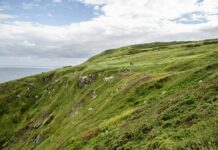
If you’ve ever scrolled through travel photos of Ireland, chances are you’ve come across those winding coastal roads, dramatic green cliffs, and endless ocean views. That’s the Ring of Kerry — one of the most breathtaking scenic routes in the world and one of Ireland’s most beloved landmarks.
What exactly is the Ring of Kerry?
The Ring of Kerry is a circular driving route of about 179 kilometres that winds around the Iveragh Peninsula in County Kerry, in the southwest of Ireland. The route takes you through charming villages, rugged mountains, shimmering lakes, ancient ruins, and stunning views of the Atlantic Ocean.
Most people begin and end the loop in Killarney, one of Ireland’s most picturesque towns, known for its national park and the lakes that surround it. Along the way, you’ll pass through places like Cahersiveen, Waterville, Sneem, and Kenmare — each with its own character and scenery.
Why is the Ring of Kerry so famous?
This route appears in virtually every European travel guide — and for good reason. What makes it so special is the perfect blend of wild natural landscapes and authentic Irish culture. You’re not just driving along a pretty road — you’re passing through centuries of history, from Celtic stone forts to medieval monasteries, through communities where Irish Gaelic is still spoken as a first language.
The route also includes unforgettable stops like the Skellig Islands, a UNESCO World Heritage Site and filming location for the Star Wars franchise. A boat trip out there is absolutely worth it.
How should you do the Ring of Kerry?
Most travellers do it by car or bike, setting aside a full day — or two, if you want to take it slow. The recommended direction is anti-clockwise, which helps avoid traffic issues with tour buses on the narrow roads.
If you’re on a language exchange in Cork or Dublin, the Ring of Kerry is easily reachable for a weekend trip. It’s the kind of experience that reminds you why Ireland is so much more than a classroom — and those who embrace slow travel in Ireland will find this route absolutely perfect for that mindset.
When to go and what to bring?
Ireland’s weather is famously unpredictable, so the golden rule is: layer up. Even in summer, rain is possible. But honestly, the mist and drizzle make the landscape even more dramatic and magical.
The most popular window is May through September, when the days are longer and the weather is milder. Travelling off-season means fewer crowds and a much more personal experience.
One final tip: stop at local pubs along the way and chat with the people there. The Irish are wonderfully welcoming, and those moments tend to stay with you long after the trip ends. And if you’re based in Cork during your exchange, there’s plenty more to explore — just like there’s more to Cork beyond English classes than most people realise.
Ready to take the next step? Get in touch and find out how studying in Ireland with SEDA College can transform your future.